 Visit Lisbon Guide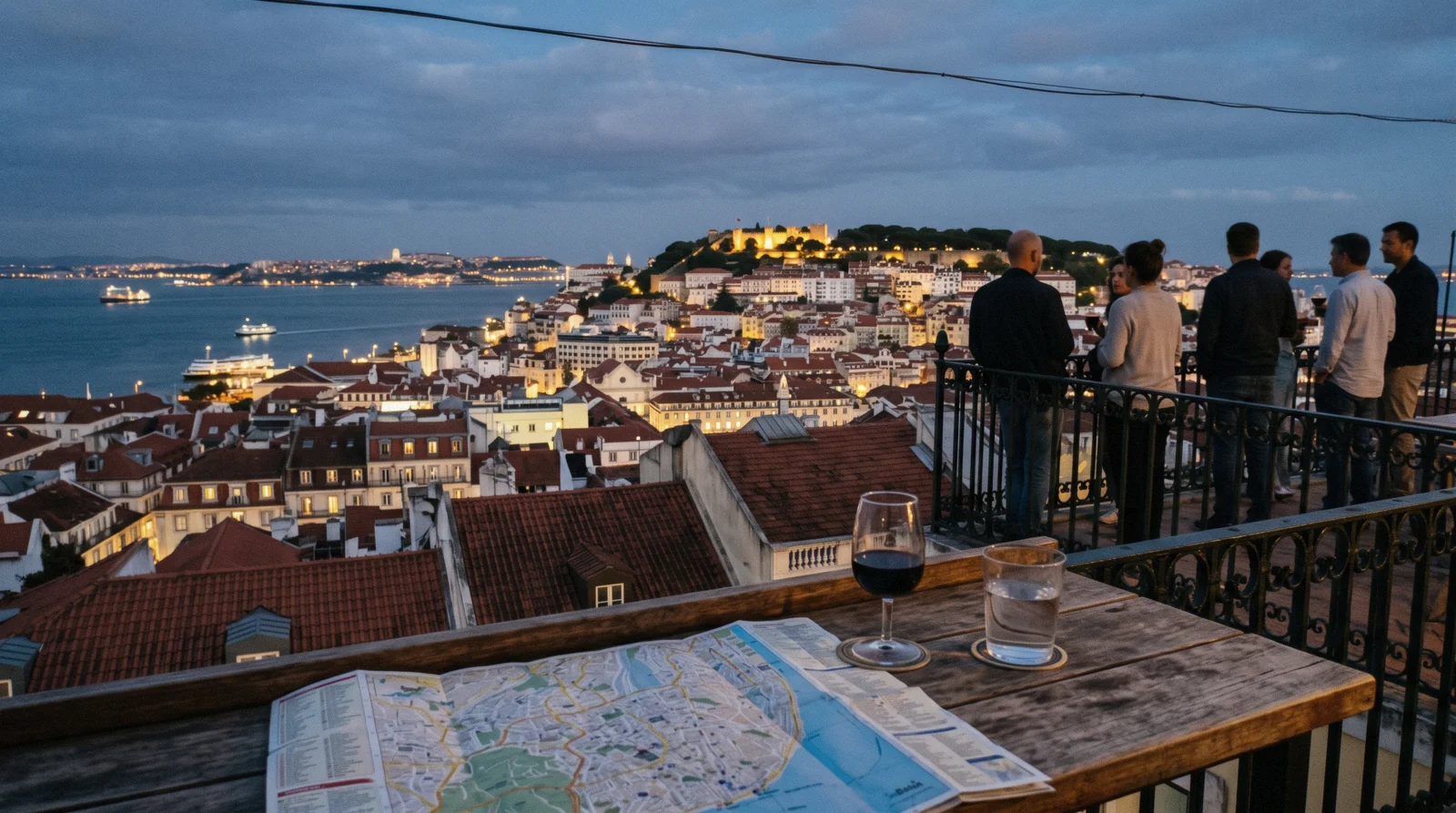
Where to Stay in Lisbon
Where to stay in Lisbon comes down to one question: flat and central, or on a hill with a view. Baixa and Chiado put every tram, metro line and ticket office within ten minutes on foot; Alfama, Bairro Alto and Príncipe Real put you above the crowds and below a staircase. This page compares seven areas on the walk to Praça do Comércio, the midweek room rates Google Hotels returned on 29 August 2026, and what each one costs you in sleep, steps or transport.
Quick answer The area to pick for a first visit, what a room costs and what the city adds
For a first visit, stay in Baixa or Chiado: flat, on both metro lines that matter, within 10 minutes on foot of the Rossio station platform for Sintra and the tram stop for Belém, with midweek doubles at a median of €141 (about $165) in Baixa and €177 (about $207) in Chiado on 29 August 2026. Alfama is the view and the fado, at the price of a 12-minute climb every evening; Bairro Alto is the cheapest central bed at €99 (about $116) median and the loudest.
Key takeaways
- Every hotel bill adds Lisbon's tourist tax: €4 (about $4.70) per person per night, capped at 7 nights, from age 13; the rate bands by area below are room only, before it.
- The Glória, Bica and Lavra funiculars and the Santa Justa lift have been closed since 3 September 2025, so a hotel in Bairro Alto or on the castle hill means stairs or the replacement buses; check the street on the map before you book a room 'five minutes from Baixa'.
- Arriving late? The red metro line runs from the airport until 01:00 for €1.90 (about $2.20) on a navegante card; after that a private airport transfer at €24 is the fixed-price option, and the getting around page has the bus alternatives.
- Sleep near Rossio if Sintra is in the plan and near Cais do Sodré if Cascais is; the 3-day itinerary shows why the two stations are on opposite sides of Baixa, and the things to do in Lisbon page has the how-many-nights planner.
Seven Lisbon areas compared
The seven areas most visitors choose between, with the walk to Praça do Comércio measured from each area's centre on the map (our estimates, rounded up for hills and cobbles), what each is good for, and the thing the listing photos do not show. Rates are in the next table.
| Area | Walk to Praça do Comércio | Best for | Watch out for | Guide |
|---|---|---|---|---|
| Baixa and Rossio | about 3–8 min, flat | First visit, Sintra train from Rossio, every metro line | Street noise on the pedestrian grid, tourist-menu restaurants | Baixa guide |
| Chiado | about 8 min, one slope | Shops, theatres, fado in Chiado, the best-placed mid-range hotels | Highest median rate of the seven; Bairro Alto's bars start one street up | Chiado guide |
| Alfama and the castle hill | about 12 min, downhill; 15–20 back up | Views, fado houses, the castle at 09:00 before the queue | Stairs everywhere; tram 28 crawls; luggage on cobbles | Alfama guide |
| Bairro Alto | about 15 min via Chiado | Nightlife on the doorstep, the cheapest central median rate | Bars run past 02:00 under the windows; the Glória funicular is closed | Bairro Alto guide |
| Cais do Sodré | about 10 min, flat | Cascais train, the Cacilhas ferry, Time Out Market, budget rates | Pink Street noise until late; Thursday to Saturday the market runs to 02:00 | Pink Street guide |
| Avenidas Novas and Saldanha | 12 min by metro, not walkable | Business hotels, the Gulbenkian, quiet nights, family rooms | Nothing to walk to after dinner; every sight is a metro ride | Gulbenkian Museum |
| Belém | 25 min by tram 15E | Jerónimos and the tower at opening, river walks, a quiet base | Everything closes early; the tram back is standing room in the afternoon | Belém guide |
Parque das Nações, the 1998 Expo district by the Oceanário, is the eighth option: modern hotels, the airport 4 metro stops away, the centre 25 minutes; it is in the rate table and on the Parque das Nações page.
The eight areas on the map
One pin per area at its centre, plus the two stations that decide day trips and the airport. The hill areas are the ones east and west of the flat Baixa grid.
Baixa and Rossio: for a first visit, and for the Sintra train
Baixa is the grid the Marquis of Pombal laid out after the 1755 earthquake, and the reason it works as a base is that it is the only flat part of central Lisbon. Praça do Comércio at the bottom, Rossio at the top, four hundred metres between them, and the two metro lines you use most (green to Cais do Sodré and Baixa-Chiado, blue to Restauradores and the Marquês de Pombal interchange) both surface here. Tram 15E to Belém leaves from Praça da Figueira, the Lisboa Card is collected at the Ask Me Lisboa office on Praça do Comércio, open daily 10:00–19:00, and Rossio station, the one with the horseshoe doors on Praça Dom Pedro IV, is where the CP trains to Sintra start. If Sintra and Pena Palace are in your plan, a bed within five minutes of Rossio saves the one morning that has a slot with no late tolerance.
The trade is noise and food. The pedestrian streets between Rua Augusta and Rua dos Fanqueiros carry voices and buskers until midnight, and the ground-floor restaurants along them sell the €12 (about $14) grilled sardines with a laminated menu in six languages. A room on an upper floor facing a side street fixes the first problem; walking three streets in any direction fixes the second, and the where to eat page names the places we would actually go to. Midweek doubles came back at a €129–160 (about $151–187) middle band for 14–15 October 2026, the tightest spread of the seven areas, which is another way of saying the hotels here are interchangeable three- and four-stars in converted Pombaline blocks.
One warning from the map: 'Baixa' on a listing sometimes means the slope of Rua da Madalena or the streets climbing to the cathedral. Those are the beginning of the Alfama hill, not the grid, and the Baixa neighbourhood guide draws the line.
Chiado: the best-placed mid-range hotels, at the highest median
Chiado is the shelf above Baixa where the bookshops, the theatres and the 1920s cafés are, one slope up Rua Garrett or one metro escalator from Baixa-Chiado station, which has exits on both levels. It is the address most first-time visitors would pick if price were no object, because it is flat once you are up, within 8 minutes on foot of Praça do Comércio, 4 minutes of the Carmo Convent ruins and 10 minutes of Cais do Sodré for the Cascais train, and because the fado houses of Chiado and the restaurants of Rua das Flores are the kind you would choose even if you did not live here.
The cost is the cost. Google Hotels returned a €120–236 (about $140–276) middle band for a midweek October double, with the median at €177 (about $207), the highest of the seven areas and the widest spread, which means the same street holds a €120 guesthouse and a €450 design hotel. The other cost is Bairro Alto: the bars begin one street above Rua Garrett, and a Chiado room on the Bairro Alto side (Rua da Misericórdia, Rua do Norte) hears them on Friday and Saturday nights. Ask for the Baixa side or a courtyard.
Since the Santa Justa lift closed on 3 September 2025, the walk down to Baixa is by Rua do Carmo or the Baixa-Chiado escalators, both easy; the walk up with a suitcase is the reason to take the metro one stop. The Chiado guide has the street-by-street version.
Alfama and the castle hill: the view, the fado, the stairs
Alfama is the medieval hill east of Baixa that the earthquake did not level, a maze of lanes between the cathedral and the castle walls with the Tagus at the bottom of every view. Staying here means waking up above the river, walking to São Jorge Castle for the 09:00 opening (daily, €17, about $20) before the coaches, and hearing fado through open windows from the houses along Rua de São Miguel. Midweek doubles came back at €128–230 (about $150–269) in the middle band, median €169 (about $198), most of them small guesthouses in restored townhouses rather than hotels.
The trade is written in the street names: Escadinhas, Beco, Calçada. Everything in Alfama is a staircase, tram 28 through it moves at walking pace and is full by mid-morning, and no taxi can reach most doors. The walk down to Praça do Comércio is about 12 minutes; the walk back up at night is 15 to 20 and steep. Since September 2025 there is no funicular shortcut on this side either; the replacement buses on the funiculars page serve the other hill. Pack a bag you can carry, ask the host exactly which lane the door is on, and read the Alfama guide for the lanes that are flat enough for a wheeled case.
Graça, above Alfama on the way to the National Pantheon, is the same hill with two miradouros and fewer tourists; the same stairs rule applies, and the National Pantheon page covers the quiet side of it.
Bairro Alto and Príncipe Real: nightlife on the doorstep, or a garden above it
Bairro Alto is a sixteenth-century grid of narrow streets on the hill west of Baixa that becomes an open-air bar from about 22:00 until the small hours, Thursday to Saturday especially. It has the cheapest central rooms in the city, a €75–151 (about $88–177) middle band and a €99 (about $116) median for a midweek October double, and the reason is in the second sentence: the bars are under the windows and the party is on the street, not inside. If you came for the nightlife, this is where to stay and you already know that. If you did not, book elsewhere or book a room on Rua da Rosa's upper end or facing an interior courtyard, and read the Bairro Alto guide before you decide.
The access is the other change since 2025. The Glória funicular from Restauradores, the way most visitors used to reach Bairro Alto, has been closed since the 3 September 2025 derailment, and the Bica funicular on the other side of the hill is closed too. Carris runs bus 51E in place of the Glória and 22B in place of the Bica; otherwise it is the Calçada da Glória on foot, about 8 minutes and steep, or the Baixa-Chiado metro escalators and a level walk across Chiado.
Príncipe Real is the next square up the hill, a garden with a cedar tree and a Saturday organic market, and a different proposition: boutique hotels in nineteenth-century palacetes, the highest median of the eight areas at €178 (about $208) with a €166–251 (about $194–294) middle band, quiet streets, and the same walk down through Bairro Alto to Baixa, about 20 minutes. Rato metro station on the yellow line is 6 minutes away. It suits couples who want to be near the centre without being in it; the neighbourhoods index puts it against the other hills.
Cais do Sodré: the cheapest flat base, and the Cascais platform
Cais do Sodré is the riverfront district at the bottom of Chiado where the Cascais trains, the Cacilhas ferries and the green metro line all meet, and where the Time Out Market fills the old Mercado da Ribeira from 10:00 to midnight, and to 02:00 Thursday to Saturday. It came back with the lowest middle band of the eight areas, €71–122 (about $83–143), median €97 (about $113), and it is flat: 10 minutes on foot along the river to Praça do Comércio, 10 minutes up to Chiado.
The catch is Pink Street, Rua Nova do Carvalho, the former sailors' bar strip that is now the late-night street of the district; a room on it or on Rua do Alecrim above it hears the crowd until the bars shut. Two streets east, along Rua dos Remolares or towards the ferry terminal, it is a working waterfront that goes quiet by midnight. Cais do Sodré is the right base for the coast: CP trains to Cascais leave from here, the ferry to Cacilhas for Cristo Rei is €1.60 (about $1.90) zapping since 16 March 2026, and the Cascais day starts on the platform rather than on the metro.
Avenidas Novas and Saldanha: quiet, level and a metro ride from everything
North of the Marquês de Pombal roundabout the city becomes a grid of twentieth-century avenues, business hotels and offices, and this is where the large chain hotels with family rooms, lifts, parking and breakfast buffets are. Google Hotels returned a €113–143 (about $132–167) middle band and a €134 (about $157) median, with the narrowest spread outside Baixa, and the streets are level, which after a day in Alfama counts. The Gulbenkian Museum is a 10-minute walk from Saldanha; nothing else in this guide is.
That is the trade. Saldanha and Picoas are on the yellow and red metro lines, Praça do Comércio is 12 minutes by metro with one change at Baixa-Chiado or none via Terreiro do Paço on the blue line from Marquês de Pombal, and the red line runs straight to the airport, which makes this a sensible base for a late arrival or a conference. It is not a base for walking out after dinner into anything older than 1950. Families with a pushchair, anyone who cannot do stairs, and anyone with a hire car (the historic centre has almost no hotel parking) choose it for good reasons; the accessibility page explains the stairs the centre hides.
Belém: the monuments at opening, and an early night
Belém is 6 kilometres west along the river, the district of the Jerónimos Monastery, the Belém Tower, the Coach Museum, MAAT and the pastry shop, reached by tram 15E from Praça da Figueira or the Cascais-line train to Belém station. Staying here has one clear advantage: you are at the monastery cloister door at 09:30 or the tower's first slot at 09:00 (the museum's English page; the Portuguese page says 09:30) while the day-trippers are still on the tram, and the riverside from the tower to MAAT is a good evening walk. Rates came back at a €70–171 (about $82–200) middle band, median €104 (about $122), with a few very expensive outliers pulling the top of the band up.
The disadvantage is everything else. The monuments close at 17:30 or 18:00, the restaurants along Rua de Belém close early, and the tram 15E back into town is standing room from mid-afternoon; the last one runs late but you will be on it after every dinner in Chiado. Two nights in Belém at the start or end of a stay work; five nights here means five tram rides a day. The Belém guide has the order to see the monuments in, and the Lisbon in 3 days plan shows how a Baixa base covers Belém in one morning instead.
Parque das Nações: modern hotels, the Oceanário and the airport
The 1998 Expo site along the river north-east of the centre is the newest district in the city: wide promenades, the Oceanário, the cable car, the Vasco da Gama shopping centre and a row of large hotels built for the exhibition and the conference trade since. Oriente station under the Calatrava roof has the red metro line (4 stops to the airport, about 25 minutes to Baixa with a change at Alameda or São Sebastião), the Intercidades trains to Évora and Porto, and the coach station. Google Hotels returned a €113–225 (about $132–263) middle band, median €144 (about $168).
It suits three kinds of visitor: families who want the Oceanário and a flat promenade with bike lanes, anyone with a 06:00 flight, and anyone coming to a trade fair at the FIL halls. For a first visit to Lisbon it puts every other page of this guide at least 25 minutes away and gives you an evening in a district that empties after the offices close. The Parque das Nações page covers what is there; the Oceanário's time-tiered prices (€29 in the morning, €25 after 16:00) are the one reason to be nearby at opening.
What a room costs, area by area
Eight areas, each with the walk to the sights, the midweek rate band and the trade you make by sleeping there. The band is the middle half of the rates Google Hotels returned on 29 August 2026 for a midweek night, Wednesday 14 October to Thursday 15 October 2026, two adults, room only, 17 to 20 hotels per area; the median sits inside it. Lisbon's tourist tax of €4 per person per night (up to 7 nights, from age 13) is added at the hotel and is not in these figures. Dollar figures at €1 = $1.17.
Baixa and Rossio
- Walking distance
- 3–8 minutes to Praça do Comércio, flat
- Typical double
- €129–160 (about $151–187), median €141
- Suits
- A first visit, the Sintra train from Rossio, every metro line within 5 minutes
Ask for an upper floor off the pedestrian grid: Rua Augusta and its side streets carry buskers and voices until midnight. What Baixa is like street by street.
See stays in Baixa and RossioChiado
- Walking distance
- 8 minutes to Praça do Comércio, one slope
- Typical double
- €120–236 (about $140–276), median €177
- Suits
- Two to four nights with money to spend on the room, theatres and restaurants on the doorstep, fado in Chiado
The widest price spread of the eight; the Bairro Alto side (Rua da Misericórdia, Rua do Norte) hears the bars on weekend nights. The Chiado guide names the quiet streets.
See stays in ChiadoAlfama and the castle hill
- Walking distance
- 12 minutes down to Praça do Comércio, 15–20 back up
- Typical double
- €128–230 (about $150–269), median €169
- Suits
- Couples, the castle at 09:00, fado through the window, a river view from the bed
Stairs to every door and no taxi to most of them; tram 28 is full by 10:00. Which lanes take a wheeled suitcase.
See stays in Alfama and the castle hillBairro Alto
- Walking distance
- 15 minutes to Praça do Comércio via Chiado; Glória funicular closed
- Typical double
- €75–151 (about $88–177), median €99
- Suits
- Nightlife on the doorstep, the cheapest central median, hostels and guesthouses
The street is the bar until 02:00 or later Thursday to Saturday. Bus 51E replaces the closed funicular from Restauradores. Bairro Alto by day and by night.
See stays in Bairro AltoPríncipe Real
- Walking distance
- 20 minutes to Praça do Comércio; Rato metro 6 minutes
- Typical double
- €166–251 (about $194–294), median €178
- Suits
- Boutique hotels in old palaces, a garden square, quiet nights close to the centre
The highest median of the eight and the only hill area without a tram. The walk down goes through Bairro Alto; the neighbourhoods index compares it with Chiado.
See stays in Príncipe RealCais do Sodré
- Walking distance
- 10 minutes to Praça do Comércio along the river, flat
- Typical double
- €71–122 (about $83–143), median €97
- Suits
- The Cascais train and the Cacilhas ferry, Time Out Market, the lowest rates of the flat areas
Pink Street and Rua do Alecrim are loud until the bars close; two streets east it is quiet. What Pink Street is now.
See stays in Cais do SodréAvenidas Novas and Saldanha
- Walking distance
- 12 minutes by metro to Praça do Comércio; not walkable
- Typical double
- €113–143 (about $132–167), median €134
- Suits
- Chain hotels with family rooms, lifts and parking; the Gulbenkian; a late flight on the red line
Level streets and quiet nights, and nothing older than 1950 to walk to after dinner. The Gulbenkian is the one sight within reach on foot.
See stays in Avenidas Novas and SaldanhaBelém
- Walking distance
- 25 minutes by tram 15E to Praça da Figueira
- Typical double
- €70–171 (about $82–200), median €104
- Suits
- Jerónimos and the tower at opening, the riverside walk, two quiet nights at either end of a stay
Monuments shut by 18:00 and the district with them; every dinner in town ends with tram 15E. The Belém guide has the morning order.
See stays in BelémParque das Nações
- Walking distance
- 25 minutes by metro from Oriente to Baixa, one change
- Typical double
- €113–225 (about $132–263), median €144
- Suits
- Families for the Oceanário, a 06:00 flight, the trade fair, a hire car
Four metro stops from the airport and a flat promenade; empties after office hours. What is in Parque das Nações.
See stays in Parque das NaçõesRates read on Google Hotels on 29 August 2026 for 14–15 October 2026 and rounded to the euro; a weekend, a holiday or a conference moves every band. We take a commission if you book through these links, at no extra cost to you.
What the city adds to your bill
Lisbon charges a taxa municipal turística de dormida of €4 (about $4.70) per person per night, for a maximum of 7 consecutive nights, on every guest aged 13 and over, collected by the hotel or the flat host and not included in the rate you booked at. Two adults for four nights therefore add €32 (about $37) at checkout; a family with two children under 13 adds the same €32, because the children are exempt. The €4 rate was set by the Câmara in 2024 and confirmed on the city's service page as read on 29 August 2026; the page that lists the other exemptions returned an error to us, so we print only what the city's own summary says.
Cruise passengers pay a separate arrival tax whose amount the city page did not show. The Lisbon costs page puts the tax beside the other arrival money.
From the airport to your hotel
Lisbon's airport is inside the city, 7 kilometres from Baixa, and the metro's red line has its terminus in the terminal: Aeroporto station, 06:30 to 01:00, standard fare with no airport supplement under the 2026 tariff. Buy a navegante occasional card for €0.50 (about $0.60) at the machines and load either a €1.90 (about $2.20) single or zapping credit at €1.72 (about $2) a ride; a contactless bank card tapped at the gate pays €1.92 (about $2.25). The red line reaches Oriente in 4 stops, Saldanha and São Sebastião without a change, and Baixa with one change to the green line at Alameda or to the blue at São Sebastião; the metro's own pages do not state a journey time to the centre.
Two Carris buses also stop at the terminal: 744 to Restauradores, which is Baixa, running about 07:00 to 21:30 on the August timetable, and 783 to Amoreiras; €2.30 (about $2.70) on board. The airport's own transport page loads no text without a browser, so the status of the Aerobus coach and the taxi and app fares are not stated here. Once you have dropped your bags, the same central neighbourhoods the red line serves are where most lisbon walking tours and other tours in Lisbon set out from.
| Way in | Fare | Hours | Where it lands you |
|---|---|---|---|
| Metro red line | €1.90 single / €1.72 zapping (about $2.20 / $2) + €0.50 card | 06:30–01:00 | Oriente 4 stops; Saldanha direct; Baixa with 1 change |
| Carris bus 744 | €2.30 on board (about $2.70), or the card fares | about 07:00–21:30 (August 2026 timetable) | Restauradores, the top of Baixa |
| Carris bus 783 | €2.30 on board (about $2.70), or the card fares | Timetable not shown on the Carris page | Amoreiras via Saldanha |
| Private transfer, booked ahead | From €24 per vehicle as listed | Any hour, meets the flight | Your hotel door; the only option after 01:00 apart from a taxi |
| Taxi, Bolt, Uber | Not stated on any official page we could read | 24 h | Your door; the rank is outside arrivals |
The last 200 metres, and the card
Two things about the last mile. Lisbon hotels in Alfama, Bairro Alto and parts of Chiado stand on streets a car cannot enter, so a transfer drops you at the nearest square and the last 200 metres are on foot with the case; ask the hotel for the drop point when you book. And the Lisboa Card, if you bought one, is collected at the Ask Me Lisboa desk in arrivals and covers the metro from that moment, which makes the €31 (about $36) 24-hour card start paying on the platform.
The getting around page has the full 2026 fare table.
Where to think twice
The honest answer to 'where to avoid staying in Lisbon' is that no central district is unsafe; the areas to think twice about are the ones that cost you sleep or time. A solo female traveller gets the same answer as a couple or a family: Baixa, Chiado or Avenidas Novas on a lit street are the safe, boring choices, and the three cases below are where the listing hides a catch.
- Bairro Alto and Pink Street if you are not there for the bars: the noise runs to 02:00 and beyond, Thursday to Saturday, and no double glazing in a 1700s building keeps it out. Sleep in Chiado on the Baixa side or in Príncipe Real and walk down.
- The Intendente and Martim Moniz end of the Mouraria hill: cheaper, well connected on the green line and by tram 28's terminus, and fine by day; the squares are rougher after dark than anywhere else in this list, and the safety page is where we say why. A good address for a budget stay if you are happy taking a taxi back late.
- Any 'castle view' or 'Bairro Alto' flat reached by stairs only, if anyone in the party has a heavy case, a pushchair or knees that mind: the funiculars and Santa Justa lift are closed and the listing will not tell you. Check the door on the map, then check the contour lines.
- Beyond the centre, the airport-hotel strip and the Amadora and Odivelas suburbs are cheaper on a search engine and cost the difference back in metro time and evenings spent going nowhere; the Avenidas Novas grid is the sensible compromise.
When to book, and what the calendar does to the rates
The bands above are October, the month Lisbon's rates settle after the summer. Three things move them. Santo António, the city's festival, fills every hill room around 12–13 June and turns Alfama into a street party until dawn; 13 June is also a public holiday when the state museums close. Web Summit in November fills Parque das Nações and the Avenidas Novas chains and lifts rates across the city for the week. And Easter, 1 May and New Year close the monuments on the day and fill the hotels the nights either side; the events calendar has the dates.
There is no longer a free museum Sunday to plan a cheap weekend around: since 1 August 2024 the free days at the national museums and monuments are for residents of Portugal only, so a Sunday in Lisbon costs a tourist the same as a Wednesday, and the Lisboa Card does the discounting instead. Mondays close Jerónimos, the Belém Tower, the Coach Museum and the Pantheon; the castle, the cathedral, the Oceanário and the Carmo ruins stay open, which is why a Monday arrival is not the problem it is in Florence. The best time to visit page has the IPMA month-by-month table: August averages a 28.8°C high and July 2.6 mm of rain, November 133.9 mm. The top things to do in Lisbon page has the how-many-days planner for deciding how many nights to book.
Neighbourhood guides
Each area page walks the streets, names the viewpoints and lists what is open on the day you arrive.
Alfama
The castle hill: lanes, fado, the two miradouros and which stairs a suitcase survives.
12 min from Praça do ComércioChiado
The bookshops, the Carmo ruins, the cafés and the quiet side of the hill.
8 min from Praça do ComércioBairro Alto
The bar grid by night and the miradouro de São Pedro de Alcântara by day.
15 min from Praça do ComércioBaixa
The flat grid, the arch, Rossio station and the streets that stay quiet at night.
3 min from Praça do ComércioBelém
The monuments in the right order, the tram, and why the morning is the time.
25 min by tram 15EParque das Nações
The Oceanário, the cable car and the flat waterfront for families.
25 min by metroThe first-evening walk, and the airport fix
A guided walk on the first evening shows you the hills before you commit to climbing them every day, and a pre-booked transfer solves the 01:00 arrival. Operator prices and ratings as listed on 29 August 2026.
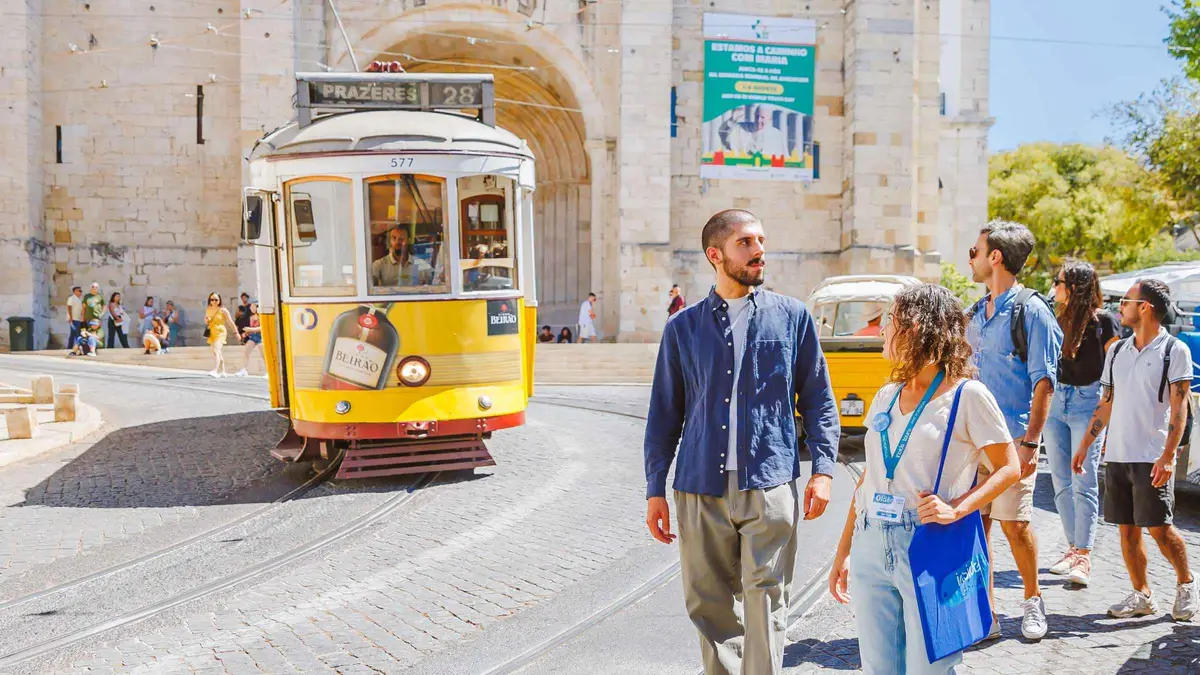 from €22
Best of Lisbon Walking Tour: Rossio, Chiado & Alfama
listed at $25.49
Three-hour walk from Rossio and the Carmo Church ruins through Chiado and Baixa into Alfama, with one pastry stop. The cheaper of the two city walks here.
Check Availability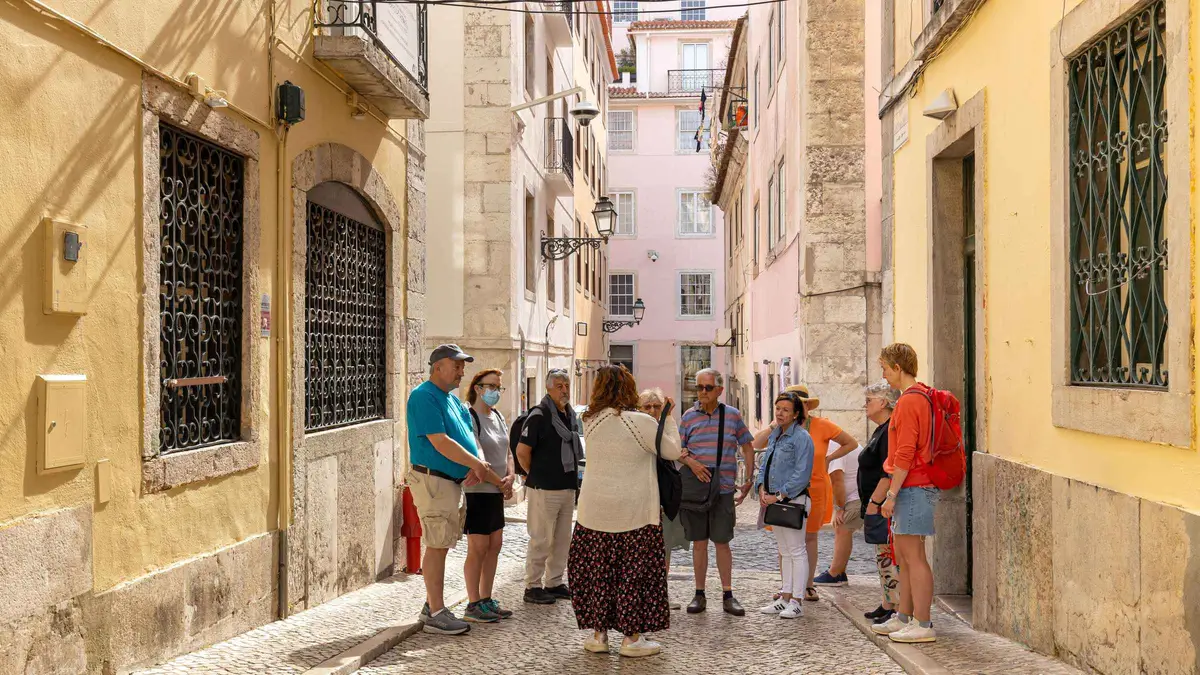 from €25
Lisbon: History, Stories and Lifestyle Walking Tour
listed at $28.96
Three-hour guided walk through Chiado and Bairro Alto up to the Miradouro de São Pedro de Alcântara, built around the city's history and everyday life. Hills and cobbles — wear proper shoes.
Check Availability from €24
Lisbon Airport: Private Transfer To/From Lisbon
listed at $27.80
Private door-to-door transfer between Lisbon Airport and your accommodation, about 30 minutes. The Metro does the same run for a few euros — this is for luggage, late arrivals and groups.
Check Availability from €31
Lisbon Card: 24, 48, or 72-Hour Pass
listed at $35.91
One pass for public transport plus free entry to the attractions on the Lisboa Card list, in 24-, 48- or 72-hour versions. Only pays off if you pack in several paid sights per day.
Check AvailabilityPrices, ratings and details are the platform's own. Dollar figures are the listed prices. The platform bills in your account's currency.
Where to stay in Lisbon: questions
Which part of Lisbon is best to stay in for a first visit?
Baixa or Chiado. Both are flat once you are there, both sit on the metro lines you use, and both are within 10 minutes on foot of the Sintra platform at Rossio and the Belém tram at Praça da Figueira. Baixa's midweek median was €141 (about $165) and Chiado's €177 (about $207) on 29 August 2026; the rate table has the bands, and the Best of Lisbon walking tour on the first evening shows you both.
Is it better to stay in the city centre or in Alfama?
The centre, unless the view is the point. Alfama gives you the castle at 09:00 and fado through the window, and takes back 15 to 20 minutes of stairs every night with no funicular to help since September 2025. Couples on a three-night stay choose it and are glad; anyone with a heavy case or a pushchair chooses Baixa and visits Alfama by day.
Where should I avoid staying in Lisbon?
Nowhere central is unsafe. Avoid Bairro Alto and Pink Street if you want to sleep before 02:00 at the weekend, avoid stairs-only flats on either hill if you cannot carry your bag, and think twice about the Intendente end of Mouraria late at night; the where to think twice section and the safety page go into each.
How much is the tourist tax in Lisbon hotels?
€4 (about $4.70) per person per night for up to 7 nights, charged to everyone aged 13 and over and paid at the hotel or to the flat host on top of the room rate. Two adults for four nights pay €32; children under 13 pay nothing. The tourist tax section has the source and the Lisbon costs page the rest of the arrival money.
Is Belém a good area to stay in Lisbon?
For two nights at the start or end of a stay, yes: you reach the Jerónimos cloister and the tower before the tram-loads arrive, and the median rate was €104 (about $122). For a whole stay, no: the district closes by 18:00 and every evening in town ends with 25 minutes on tram 15E.
Where should I stay in Lisbon for nightlife?
Bairro Alto for the bar grid, Cais do Sodré for Pink Street and the clubs along the river, both with the lowest medians of the central areas, €99 and €97 (about $116 and $113). The nightlife page maps the streets, and the Bairro Alto guide says which end is quieter after 02:00.
Where should I stay in Lisbon with children?
Avenidas Novas for the chain hotels with family rooms and lifts and a flat walk to the Gulbenkian garden, or Parque das Nações for the Oceanário and the promenade. Both are 12 to 25 minutes from the centre by metro and both avoid the stairs; the Lisbon with kids page has the days out and the rate bands the prices.
Where should I stay in Lisbon for a Sintra day trip?
Within a few minutes of Rossio station in Baixa, where the CP trains to Sintra start; the €11.40 (about $13) 24-hour Carris, Metro and CP ticket covers the ride, and the Pena Palace slot has no late tolerance, so the short walk to the platform matters. The Sintra day trip page has the timings and the Sintra tours with Pena tickets included are the version with a pickup.
Where to Stay in Lisbon on Video
Three films ranking the areas to stay, which walk the streets behind the area table on this page and show the hills between a Baixa hotel and an Alfama one.
Top 5 Best Areas To Stay In Lisbon (Lisbon Neighborhood Guide)
The five best areas to stay, close to the ranking in the area table above.
Video: The BOLD Traveller🏰 Where to Stay in Lisbon: 9 Top Areas with Map (LOCAL Guide!)
Nine areas with a map, matching the neighbourhood-by-neighbourhood notes on this page.
Video: MissTouristWhere to Stay in Lisbon Portugal? Best Areas, Hotel Costs & My Honest Choice!
Areas and hotel costs, the budget column this page fills in.
Video: Alp Galip TravelsVideos load from YouTube only when you press play. Prices and closures mentioned on camera may predate the 2026 changes printed on this page.
Prices, hours and terms are set by the venue or operator and confirmed at checkout.
We may earn a commission if you book through one of our links, at no extra cost to you. Full affiliate disclosure