 Visit Lisbon Guide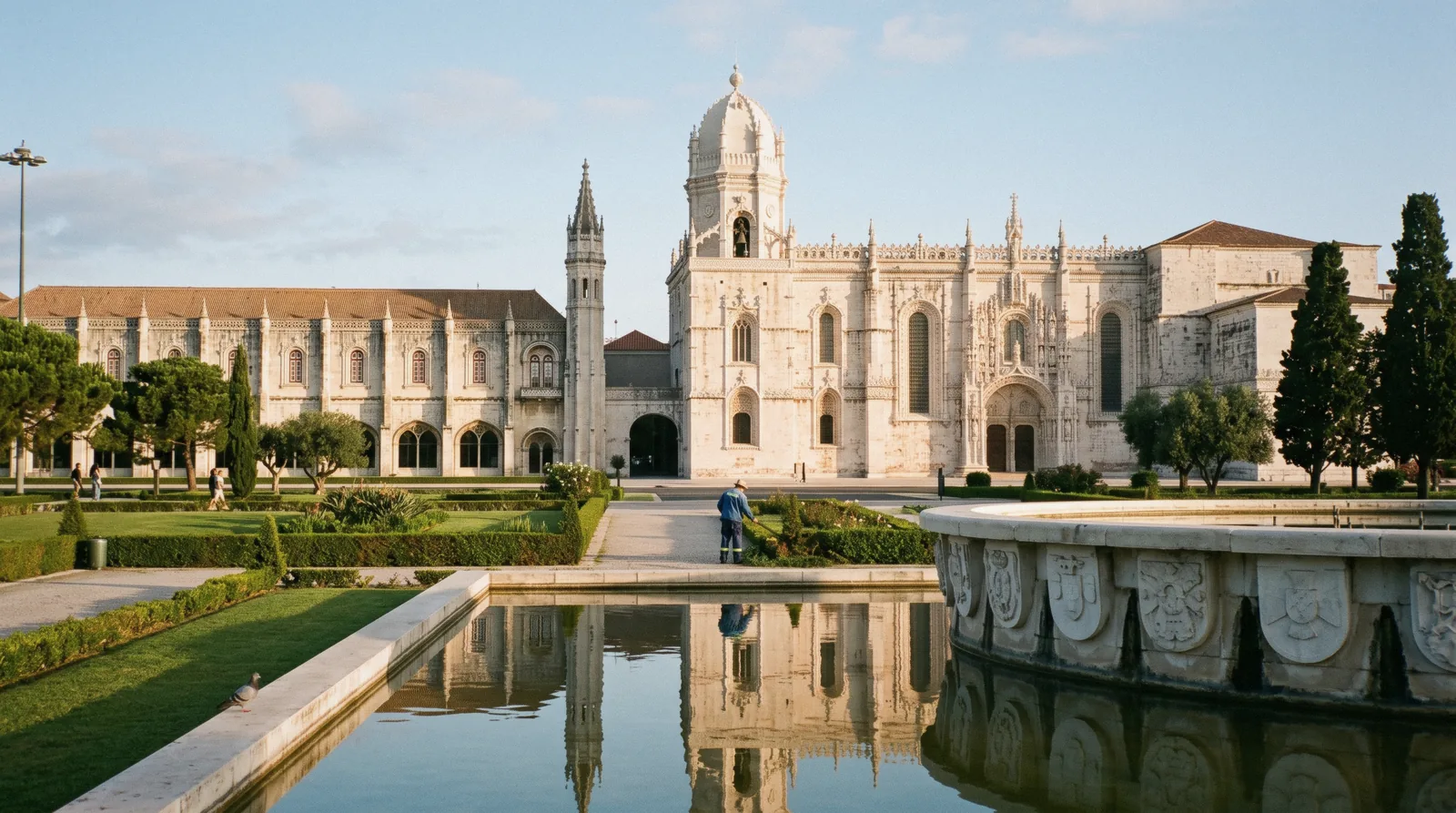
Jerónimos Monastery
The Jerónimos Monastery is the Manueline church and cloister on the Belém riverfront that Manuel I built on the pepper tax from 1501, where Vasco da Gama and Camões are buried and where Portugal signed the Treaty of Lisbon in 2007. It is two visits with two doors: the church is free, the cloister is €18 (about $21). This page covers the hours, what each half holds, the dress question and the way there; the ticket options are compared on the Jerónimos tickets page, and the rest of the riverfront on the Belém page. For the wider city, see things to do in Lisbon.
Quick answer Two doors, one free: hours, price, the tombs and the dress question in four lines
The Jerónimos Monastery has two entrances. The church, with the tombs of Vasco da Gama and Luís de Camões, is free and opens Tuesday to Saturday 10:30–17:00 and Sundays 14:00–17:00. The cloister is a €18 (about $21) ticket, open Tuesday to Sunday 09:30–17:30 with last entry at 17:00 and the ticket office shutting at 16:30. Both are closed on Mondays.
Key takeaways
- The cloister ticket is the same €18 on the official shop and on GetYourGuide; the Jerónimos tickets page compares them with the two guided walks that carry a skip-the-line entry
- The Belém walking tour with the monastery ticket includes the cloister with a guide and a pastéis stop for €56; the Belém and Jerónimos tour adds Vasco da Gama's tomb to the route for €59
- No dress code is printed by the monastery: it is a working church, so shoulders and knees covered is the courteous default, but nobody was checking on our reading of the reviews. The Belém Tower is a fifteen-minute walk west
Key facts
Opening hours
| Cloister, Tue–Sun | 09:30–17:30 |
|---|---|
| Church, Tue–Sat | 10:30–17:00 |
| Church, Sun | 14:00–17:00 |
Closed Mondays, 1 January, Easter Sunday, 1 May, 13 June, 25 December; church closed to visitors on Sunday mornings and during services
Admission
- Adult
- Cloister €18 (about $21); church free
- Reduced
- €9 (about $10.50) for 65+, 13–24 and family groups with a minor
- Free
- Under 12; disabled visitors and one companion; unemployed EU residents
Planning it
- Time needed
- Not stated by the monument; our routing: 30 minutes for the church, an hour for the cloister and upper choir
- Book ahead
- Recommended — a few days
- Address
- Praça do Império, 1400-206 Lisboa
The five ways into the Jerónimos cloister, priced from museusemonumentos.pt and GetYourGuide on 29 August 2026 and converted at €1 = $1.17. The church needs no ticket at all. The official shop and the platform ticket cost the same; the walks add a guide and the pastry stop; the Lisboa Card covers entry with a reserved slot. The full comparison, with reduced fares and the free days, is on the Jerónimos tickets page.
Are you paying for the cloister, or for someone to explain it? The church is free either way and has its own door.
| Option | Price | Includes | Cancel | Book |
|---|---|---|---|---|
| Official cloister ticket, museusemonumentos.ptThe default, and the only seller if you want a specific morning slot | €18 (about $21); €9 reduced | Cloister, chapter house, refectory, upper choir | Not stated as refundable | Official site |
| Jerónimos Monastery entrance ticket, GetYourGuideThe same ticket on a platform calendar — no reason to prefer it, no reason to avoid it | €18 (about $21) | Cloister entry; same ticket, platform calendar | None stated on the listing | Check Availability |
| Belém walking tour with monastery ticket, 3 hA first visit to Belém: the carving explained and a pastry stop, ending at the tower | €56 (about $66) | Skip-the-line cloister with guide, pastéis tasting, ends at Belém Tower (exterior) | None stated on the listing | Check Availability |
| Belém and Jerónimos Monastery tour, 3 hThe same walk with the church and the tombs added to the route | €59 (about $69) | Guided cloister and church, Vasco da Gama's tomb, one pastel, monument exterior | None stated on the listing | Check Availability |
| Lisboa Card 24 hTwo Belém entries plus the trams in one day; slots are reserved after collection | €31 (about $36) | Cloister and Belém Tower with reserved slots, Carris, Metro, CP trains | None stated on the listing | Check Availability |
The monastery prints no combined ticket with the Belém Tower; the pair is €18 plus €15 bought separately, or the Lisboa Card if you will ride the tram and train the same day.
Jerónimos Monastery entry options compared
Every card links to the operator's page, where the calendar shows what is open on your date. Prices in euro as listed on 29 August 2026; the church is free whichever you pick.
 from €18
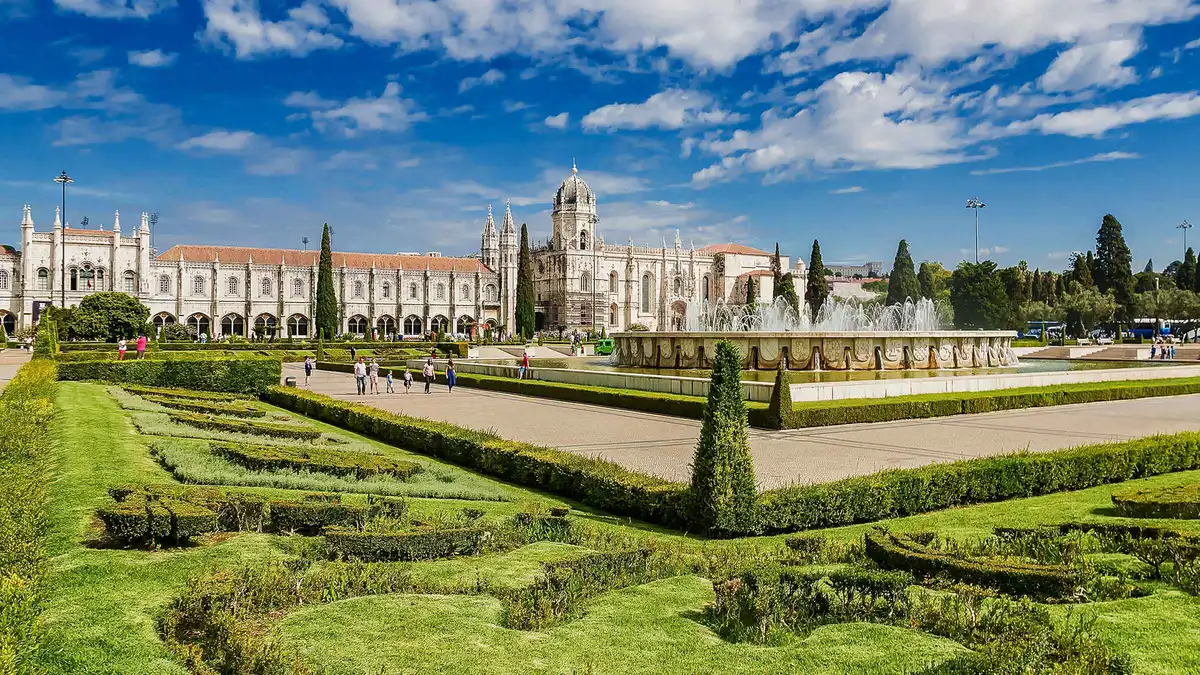
Lisbon: Jerónimos Monastery Entrance Ticket
listed at $20.85
Plain entry ticket to the 16th-century Manueline monastery in Belém. The official shop sells the same ticket — compare before booking.
Check Availability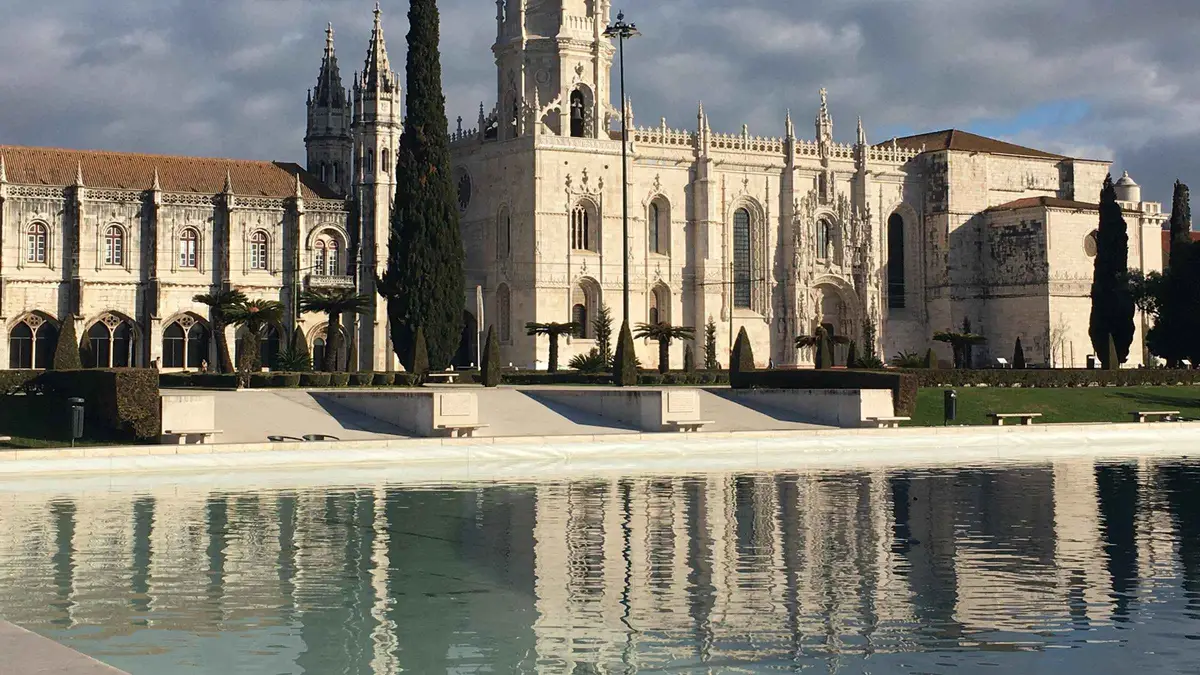 from €56
Lisbon: Belem Walking Tour with Jeronimos Monastery Ticket
listed at $64.87
Three-hour Belém walk with a skip-the-line Jerónimos Monastery ticket and a pastéis de Belém stop, ending at Belém Tower from the outside. Tower entry is not included.
Check Availability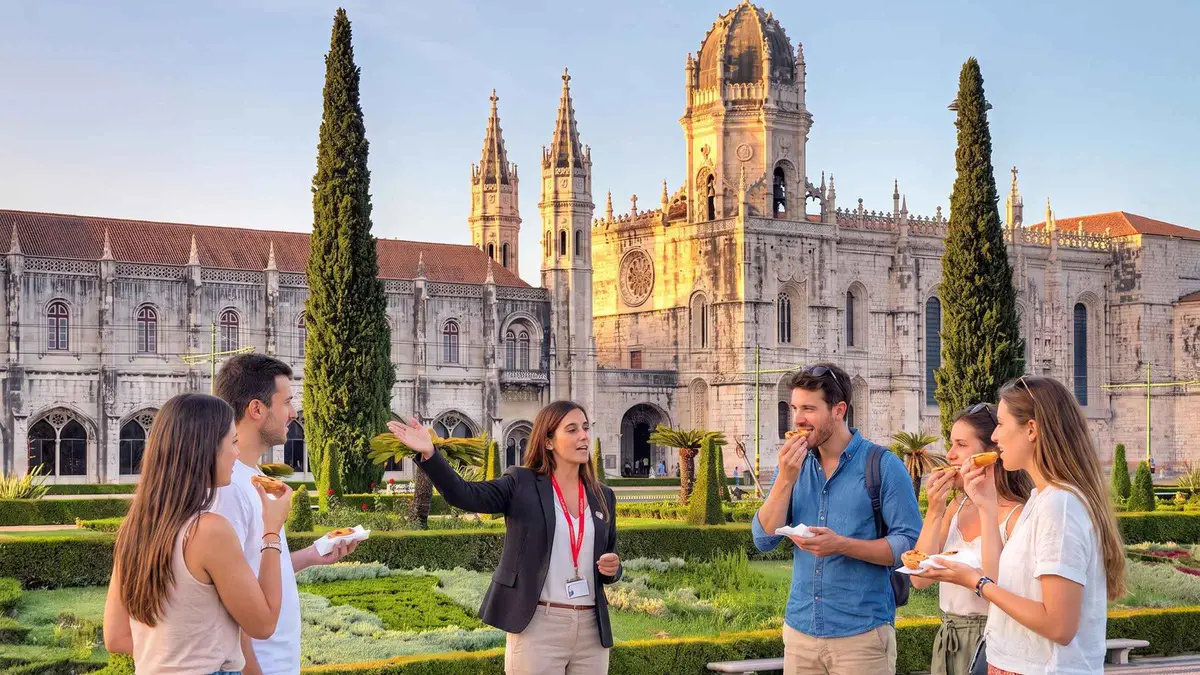 from €59
Lisbon: Belém & Jerónimos Monastery Tour
listed at $61.51
Three-hour guided walk through Belém: Jerónimos Monastery and Vasco da Gama's tomb, a Pastel de Belém, and the Monument to the Discoveries from outside. Belém Tower is not included.
Check Availability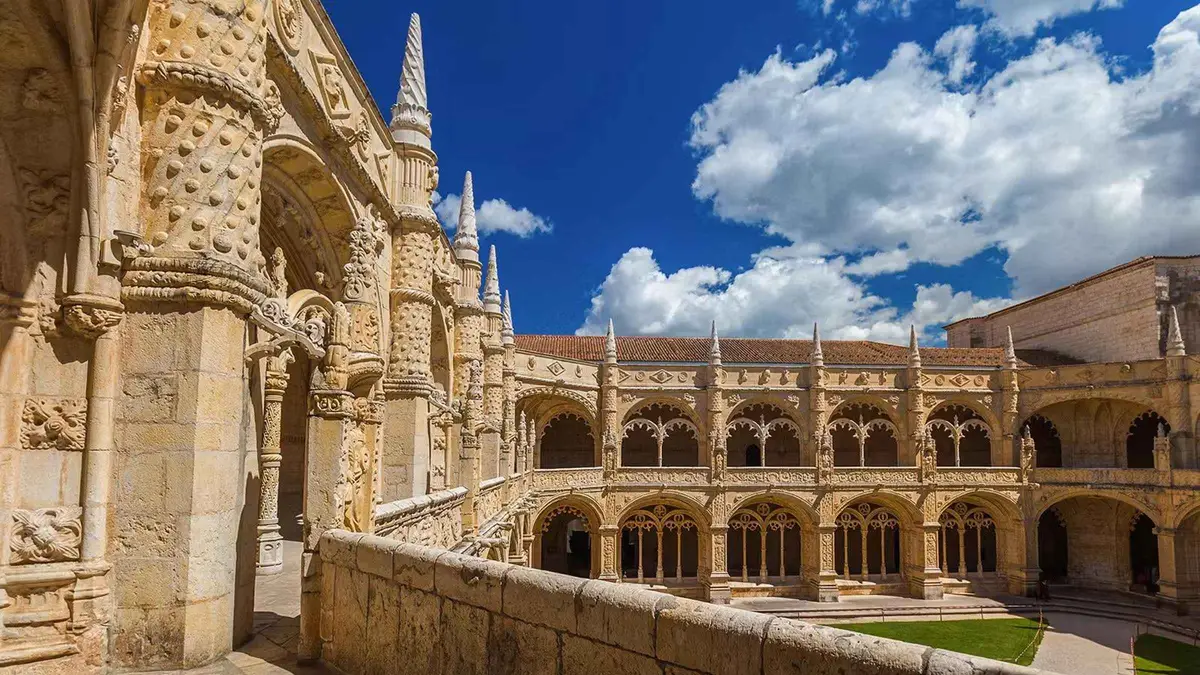 from €31
Lisbon Card: 24, 48, or 72-Hour Pass
listed at $35.91
One pass for public transport plus free entry to the attractions on the Lisboa Card list, in 24-, 48- or 72-hour versions. Only pays off if you pack in several paid sights per day.
Check AvailabilityPrices, ratings and details are the platform's own. Dollar figures are the listed prices. The platform bills in your account's currency.
What the Jerónimos Monastery is: the pepper-tax monastery, 1501–1601
The monastery replaced a small chapel of the Order of Christ on the Restelo beach where sailors prayed before leaving the Tagus; Vasco da Gama's crew spent the night of 7 July 1497 there. What Manuel I put in its place was a statement about where the money now came from.
Built on the Vintena da Pimenta
Manuel I obtained the cortes' approval in 1495 and the Pope's in 1496, and construction began on 6 January 1501. It was funded by the Vintena da Pimenta, a five per cent levy on the trade from Africa and the East, which the sources put at the equivalent of 70 kilograms of gold a year; pepper, cinnamon and clove duties went straight to the Crown. That income is why the building is so large and why the carving never stops. The king intended it as the pantheon of the House of Aviz and gave it to the Hieronymite monks, whose job was to pray for his soul and for the sailors leaving from Restelo. They did so until the religious orders were dissolved in 1833.
The first master was Diogo de Boitaca, who had pioneered the Manueline style at Setúbal and who laid out the church and the cloister. João de Castilho, from Biscay, took over in 1517, finished the south portal and threw the single vault across the nave; Nicolau Chanterene carved the west portal the same year. Diogo de Torralva added the main chapel and the choir from 1550, Jerónimo de Ruão followed in 1571, and the money ran out in 1580 when Spain took the throne and the Escorial took the budget. The limestone is lioz, quarried in Ajuda, Alcântara and Laveiras, a few kilometres from the site.
Earthquake, secularisation, the tombs, the treaty
The 1755 earthquake, which flattened the Baixa, damaged only the balustrade and part of the upper choir here. On 28 December 1833 the state secularised the monastery and handed it to the Casa Pia orphanage, which used the dormitories as a school until the 1940s; the Maritime Museum moved into the west wing in 1963 and the National Archaeology Museum into the annexe. In 1880 the remains of Vasco da Gama and of Luís de Camões, who wrote the voyage into The Lusiads, were moved into new tombs by Costa Mota in the church.
The cloister paving and the square outside were remade for the 1940 Portuguese World Exhibition. UNESCO listed the monastery with the Belém Tower in 1983, Portugal signed its EEC accession in the cloister in 1985, and the Treaty of Lisbon was signed here on 13 December 2007.
The Jerónimos Monastery In Ten Dates
A hundred years to build, a pepper tax to pay for it, and two European treaties signed in the cloister.
-
1495–1496
Manuel I gets his approvals
The cortes agree in 1495 and the Pope in 1496. The king wants a pantheon for the House of Aviz on the Restelo shore, where ships left for the East.
-
6 January 1501
Building begins, on the pepper tax
Funded by the Vintena da Pimenta, five per cent of the trade from Africa and the East, which the monastery's own history puts at the equivalent of 70 kilograms of gold a year.
-
1517
Castilho takes over
João de Castilho finishes the south portal and throws a single stellar vault across a nave nineteen metres wide. Nicolau Chanterene carves the west portal the same year.
-
1550–1571
The chancel and the choir
Diogo de Torralva adds the main chapel and choir in a classical manner; Jerónimo de Ruão follows and sets the royal tombs on their marble elephants.
-
1580
The money stops
Spain takes the Portuguese throne and the Escorial takes the budget. What was unbuilt stayed unbuilt.
-
1 November 1755
The earthquake spares it
The shock that flattened the Baixa a few kilometres east damaged only the balustrade and part of the upper choir here. Castilho's vault stood.
-
28 December 1833
Secularised and handed to an orphanage
The religious orders are dissolved and the Casa Pia takes the dormitories as a school until the 1940s; the Maritime Museum moves into the west wing in 1963.
-
1880
Vasco da Gama and Camões reburied
Costa Mota's two neo-Manueline tombs go in under the raised choir, just inside the west door: the navigator on the left, the poet on the right.
-
1940
Remade for the Exhibition
The cloister paving and the square outside are rebuilt for the Portuguese World Exhibition, which is why the setting looks mid-century and the building does not.
-
1983, then 2007
World Heritage, then the Treaty of Lisbon
UNESCO lists the monastery with the Belém Tower. Portugal signs its EEC accession in the cloister in 1985, and the Treaty of Lisbon is signed here on 13 December 2007.
Sources: the monastery's history and chronology on museusemonumentos.pt, read on 29 August 2026, and the UNESCO listing for the Monastery of the Hieronymites and Tower of Belém.
The church: free, and where the tombs are
The church of Santa Maria de Belém is entered through the west portal, the smaller door on the square side, not the great south portal facing the river. It is a parish church with services, which is why it opens later than the cloister and shuts to visitors on Sunday mornings.
The nave and the vault
Castilho's vault is the reason to come in. A single span of stellar ribs covers a nave 19 metres wide, carried on six octagonal columns 25 metres high, carved with Renaissance grotesques; at the transept the vault crosses with no pier under it at all, which is what people mean when they say it floats. The 1755 earthquake left it standing.
Look for the medallion on the north column nearest the transept, which may be a portrait of Boitaca or Castilho.
Vasco da Gama and Camões, then the kings
Just inside the west door, under the raised choir, are the two neo-Manueline tombs of 1880 by Costa Mota: Vasco da Gama on the left, resting on the caravel and the armillary sphere, and Luís de Camões on the right, with a laurel wreath. The chancel at the far end, by Jerónimo de Ruão in the classical manner, holds the royal tombs on marble elephants: Manuel I and Maria of Aragon on the left, João III and Catherine of Austria on the right. The side chapels hold Manueline altars and the enamelled terracotta Saint Jerome.
Allow half an hour; the church is one room and the tombs are at its two ends.
Dress code
The monastery publishes none, and it is the question Google asks most. It is a consecrated church where mass is said, so covered shoulders and knees is the courteous default; in the reviews we read nobody reports being turned away in shorts, and the cloister side, which is a museum, has no expectation at all. Carry a scarf in summer and the question goes away.
The cloister: what the €18 buys
The cloister door is on the west side of the square, separate from the church door, with its own ticket control. The ticket covers the two storeys of the cloister, the chapter house, the refectory and the upper choir, which looks down into the church.
Two storeys of carving, 55 metres square
Boitaca began the lower storey with its wide arches and traceried windows; Castilho finished the upper one with a plainer classical overlay and turned Boitaca's round columns into rectangular piers. Each wing has six bays, the corners bridged by diagonal arches. The inner walls carry the Manueline vocabulary — rope, armillary spheres, Order of Christ crosses, sea creatures — beside Moorish and Eastern motifs and Plateresque work on the courtyard side. This is the most photographed interior in Lisbon and it is at its best in the first hour, before the light flattens and the groups arrive.
In one of the arcades is the plain tomb of Fernando Pessoa, moved here in 1985. The chapter house off the east walk holds the tomb of Alexandre Herculano; the refectory across from it has an eighteenth-century azulejo frieze of the life of Joseph and the miracle of the loaves. Take the stair to the upper storey for the view down into the court, then follow the gallery to the upper choir: the sixteenth-century choir stalls, restored in 1924, and the only place from which you see the whole nave vault at once.
What the ticket does not cover
The Maritime Museum and the National Archaeology Museum share the building but are separate museums with separate tickets and entrances at the west and east ends of the façade. The National Coach Museum across the tram line is separate again. Nothing on the monastery's page suggests a bundle with any of them.
How Much Time To Give The Jerónimos Monastery
The monument states no visit length, so these are our three routings against its two sets of hours: cloister Tuesday to Sunday 09:30–17:30 with last entry at 17:00, church Tuesday to Saturday 10:30–17:00 and Sunday afternoons only.
The building has two doors and two clocks, and most of the confusion about how long it takes comes from treating it as one visit. The church is free, is one room and takes half an hour. The cloister is the €18 (about $21) ticket and is where the hour goes.
| Routing | On site | Door to door from the Baixa | What you skip |
|---|---|---|---|
| The church only | 30 minutes, free | About 1 h 30 by tram 15E | The cloister, the upper choir, the refectory tiles and Pessoa's tomb — everything the ticket covers |
| Church and cloister | 1 h 30, €18 (about $21) | About 2 h 30 by tram 15E | Nothing; this is the page's own routing, church first at 10:30 unless it is a Sunday |
| With the three-hour Belém walk | About an hour inside, guided | 3 h, pastry stop included | Your own pace, and the 09:30 hour in the cloister before the groups arrive — the walk starts later |
The trap in every routing is the ticket office, which shuts at 16:30 while the cloister stays open until 17:30. Arrive at 16:40 without a ticket bought online and you will be looking at the façade.
Jerónimos Monastery hours, closed days and the quiet hour
Figures from museusemonumentos.pt, read on 29 August 2026. The church and the cloister keep different hours; the table sets them side by side.
The lead-in above names the source; the table is the practical version. The 16:30 ticket-office close is the trap: arrive at 16:40 and the cloister is open but nobody will sell you a ticket, unless you already hold one bought online. The other trap is the Sunday morning, when the church is closed for mass until 14:00 while the cloister has been open since 09:30 — reverse the usual order that day.
Quiet hours are our observation, not an official figure: the cloister at 09:30 on a weekday belongs to a few dozen people; by 11:00 the coach parties from the cruise terminal and the Sintra circuits have arrived and the line at the ticket control runs along the façade. After 15:30 it thins again. A guided walk with a skip-the-line entry sidesteps the line at the cost of a fixed start.
| Part | Days | Hours | Last entry / office | Price |
|---|---|---|---|---|
| Cloister | Tuesday–Sunday | 09:30–17:30 | Last entry 17:00; ticket office closes 16:30 | €18 (about $21) |
| Church | Tuesday–Saturday | 10:30–17:00 | Not stated | Free |
| Church | Sundays and religious holidays | 14:00–17:00 | Not stated | Free |
| Both | Mondays, 1 January, Easter Sunday, 1 May, 13 June, 25 December | Closed | — | — |
Jerónimos Monastery directions: tram 15E to Mosteiro Jerónimos
The monastery faces Praça do Império on the Belém riverfront, six kilometres west of Praça do Comércio. Fares are the Carris 2026 tariff, read on carris.pt on 29 August 2026; the tram stop is named for the building.
Tram 15E from Praça da Figueira via Cais do Sodré and Alcântara stops at Mosteiro Jerónimos, directly in front of the façade; the stop before, Belém (Museu Coches), is for the coach museum and the pastry shop. Cars ran every 10–15 minutes on the August timetable, first at 00:03 and last at 23:53 from Praça da Figueira. Onboard €3.30 (about $3.85); €1.72 with zapping on a navegante card; covered by the €7.25 (about $8.50) 24-hour Carris and Metro ticket and by the Lisboa Card. The getting around page explains the card.
Train: CP Cascais line from Cais do Sodré to Belém station, then five minutes on foot north through the gardens. The single fare was not on the CP page we could read; zapping and the Lisboa Card cover it.
Bus 728 from Restauradores and Cais do Sodré along the river, €2.30 (about $2.70) onboard. On foot from the Belém Tower: fifteen minutes east along the water, then under the road by the Monument to the Discoveries.
The church door is on the west end of the square side; the cloister ticket control is beside it. The great south portal facing the river is for looking at, not entering.
Dos And Don'ts At The Jerónimos Monastery
The short version of everything above, for the morning you go.
Do
- Take the cloister at 09:30 when it opens; by 11:00 the cruise-terminal and Sintra coach parties have the line running along the façade
- Use the church's own door — it is free, and the €18 (about $21) buys the cloister only
- Buy before 16:30: the ticket office closes an hour before the cloister does, and nobody at the door will sell you one after
- Climb to the upper storey and follow the gallery to the upper choir, the only place you see the whole nave vault at once
- Reverse the order on a Sunday — the church is shut for mass until 14:00 while the cloister has been open since 09:30
- Cover shoulders and knees as a courtesy; the monastery publishes no dress code but mass is still said here
Don't
- Don't come on a Monday, or on 1 January, Easter Sunday, 1 May, 13 June or 25 December — the Belém Tower shuts on exactly the same days
- Don't expect the Maritime Museum or the National Archaeology Museum to be included; they share the building but have separate doors and separate tickets, and no bundle is printed
- Don't look for a combined Jerónimos-and-tower ticket — neither official page prints one, whatever a reseller implies
- Don't try to enter through the great south portal facing the river; it is for looking at, and the doors in use are on the square side
- Don't pay a platform more than €18 for the cloister — the official shop sells the same slot at the same price
Jerónimos Monastery map: the two doors, the tram stop, the next sights
The church entrance and the cloister ticket control on the square, the tram and train stops, and the sights within fifteen minutes on foot.
Five Things Most Visitors Do Not Know About The Jerónimos Monastery
Facts that change how the building reads, each with where it comes from.
- A pepper tax paid for it. The Vintena da Pimenta took five per cent of the trade from Africa and the East, which the monastery's own history puts at the equivalent of 70 kilograms of gold a year — which is why a building this size has carving on every surface and why the money stopped dead in 1580. (Museus e Monumentos de Portugal, the monastery's history) - The 1755 earthquake barely touched it. The shock that flattened the Baixa cracked the balustrade and part of the upper choir here and left Castilho's vault standing, four kilometres from the ruins. (Museus e Monumentos de Portugal) - The vault crosses the transept with nothing under it. A single span of stellar ribs covers a nave nineteen metres wide on six octagonal columns twenty-five metres high, and at the crossing there is no pier at all.
That is what people mean when they say it floats. (Museus e Monumentos de Portugal) - Fernando Pessoa is in the cloister. His plain tomb was moved into one of the arcades in 1985; Alexandre Herculano lies in the chapter house off the east walk, and both are inside the ticketed half rather than the free church. (Museus e Monumentos de Portugal) - Two European treaties were signed in this building. Portugal's EEC accession in the cloister in 1985, and the Treaty of Lisbon on 13 December 2007 — the reason the EU's governing treaty carries the name of a city rather than a subject.
(Museus e Monumentos de Portugal, the monastery's history)
Eating At The Monastery Door
There is nothing to eat inside the monument, and the famous answer is three hundred metres away.
Pastéis de Belém is on Rua de Belém, a three-minute walk east from the church door past the tram stop, and has been baking the convent recipe since 1837. It opens every day from eight in the morning until nine at night, and an hour later through high summer; on the December holidays it closes early. It publishes no prices anywhere on its own site, which is why none appear here.
The takeaway queue on the pavement is the visible one; the rooms behind seat several hundred and usually move faster, so go in and sit down. Come after the cloister and before the lunch crowd and the Belém morning works in one line. Elsewhere on the square the options are kiosks and the museum cafés; the Belém page names what else is on that kilometre of riverfront.
Next stop from the Jerónimos Monastery
Walk minutes are our estimates from the GPS distances.
Pastéis de Belém
The 1837 pastry shop on Rua de Belém, open every day from 08:00 and to 22:00 in July to September; the Pastéis de Belém page explains the takeaway line versus the tables.
3 min walkMonument to the Discoveries
Cross under the road for the caravel monument: €10 (about $12), lift to the top, open on Mondays when the monastery is not. Details on the Monument to the Discoveries page.
8 min walkBelém Tower
Reopened 27 May 2026 with timed slots at €15 (about $18); the same closed days as the cloister. The Belém Tower page covers the stairs and the slot to pick.
15 min walkJerónimos Monastery questions
Is it worth going to the Jerónimos Monastery?
Yes, and the church half costs nothing: Castilho's unsupported vault and the tombs of Vasco da Gama and Camões are the finest Manueline interior in the country. The cloister at €18 (about $21) is the second half and the more photographed; go at 09:30 or after 15:30. A guided walk with the cloister ticket adds the explanation the carving rewards.
Do you need tickets for the Jerónimos Monastery?
For the cloister, yes: €18, €9 reduced, under 12 free, from the official shop or GetYourGuide at the same price. For the church, no — it is free and has its own door. The Jerónimos tickets page compares the options.
Can I wear shorts to the Jerónimos Monastery?
The monastery publishes no dress code. The church is a working parish church, so covered shoulders and knees is the courteous default, and reviews we read report no one being refused in shorts; the cloister is a museum with no expectation. Carry a scarf in summer.
Why is the Jerónimos Monastery famous?
It is the largest work of the Manueline style, funded by the pepper tax on the India trade from 1501, the burial place of Vasco da Gama, Camões and Manuel I, a UNESCO World Heritage site since 1983 with the Belém Tower, and the room where the Treaty of Lisbon was signed in 2007.
What are the Jerónimos Monastery hours?
Cloister Tuesday to Sunday 09:30–17:30, last entry 17:00, ticket office closes 16:30. Church Tuesday to Saturday 10:30–17:00 and Sundays 14:00–17:00. Closed Mondays, 1 January, Easter Sunday, 1 May, 13 June and 25 December. Read on the official site on 29 August 2026; the Monday closures page lists what else shuts.
Is the Jerónimos Monastery church free?
Yes. The church with the tombs is free through the west door on the square; only the cloister, chapter house, refectory and upper choir need the €18 ticket. The Jerónimos tickets page explains which door is which.
How do I get to the Jerónimos Monastery from the centre?
Tram 15E from Praça da Figueira or Cais do Sodré to the Mosteiro Jerónimos stop in front of the façade: €3.30 onboard, €1.72 with zapping, or the €7.25 day ticket. The CP train from Cais do Sodré to Belém station is five minutes' walk away. The getting around page covers the fares.
Where the Jerónimos Monastery fits in a day
Belém is a half-day and the monastery is its centre. The order that works on a weekday: cloister at 09:30 when it opens, church at 10:30 when it opens, Pastéis de Belém at 11:15 before the lunch line, then under the road to the Monument to the Discoveries and west along the water to a Belém Tower slot booked for 12:30. On a Sunday swap the church to the afternoon.
On a Monday go elsewhere — the castle and Alfama are open. If you want a guide, the three-hour Belém walk covers the cloister and the pastries from a morning start and leaves you at the tower. The one-day itinerary and the three-day plan place this morning where the closed days allow.
Jerónimos Monastery on Video
Three films from the cloister and the church, worth a look before you decide on the ticket. The queue and the stonework film well; prices on camera may predate the figures printed on this page.
Jeronimos Monastery. Lisbon. Tour guide.
A guided tour of the monastery, the cloister and the church, the route in the visit section.
Video: Trailblazing AdventuresWatch This Before Booking Jeronimos Monastery Tickets!
What to know before booking a ticket, the same advice the ticket section gives.
Video: Yllara MaiaJerónimos Monastery in Lisbon🏰 Portugal's Greatest Monument! Full Tour [4K]
The monastery in 4K, the carved cloister the page calls the reason to pay.
Video: POV ToursVideos load from YouTube only when you press play.
Prices, hours and terms are set by the venue or operator and confirmed at checkout.
We may earn a commission if you book through one of our links, at no extra cost to you. Full affiliate disclosure