 Visit Lisbon Guide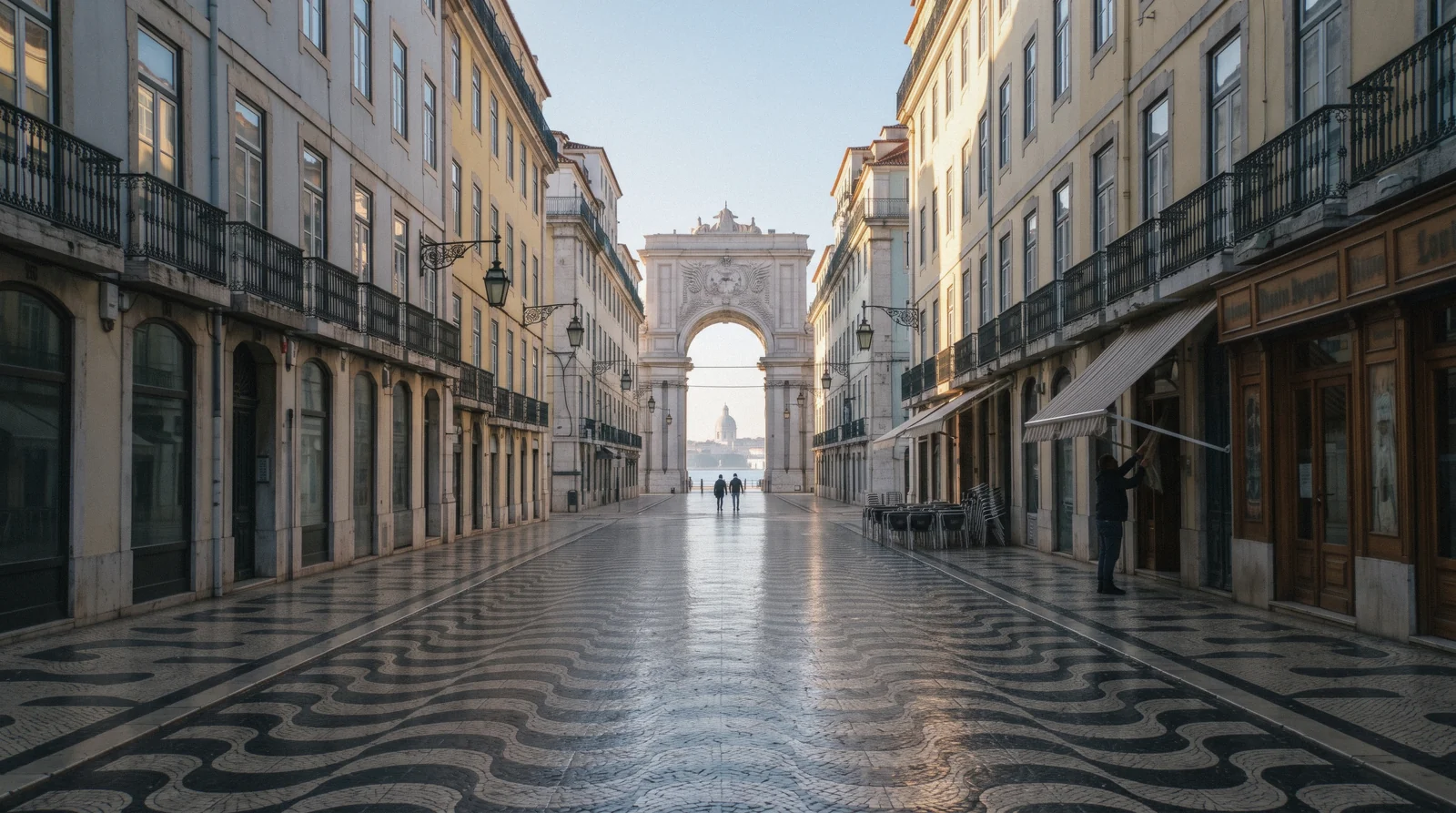
Baixa, Lisbon
Baixa Lisbon, the lower town, is the flat grid of streets between the Rossio and Praça do Comércio that the Marquis of Pombal built on the rubble of the earthquake of 1 November 1755: straight streets named for the trades, uniform façades, and inside them the gaiola, a timber cage that made these the first earthquake-resistant buildings in Europe. It is the part of the centre a suitcase can cross, the part every Metro line touches, and the part that is loudest with visitors. This page has what to see with hours and closed days, the Roman baths under a bank, the Santa Justa Lift that is closed, the safety question answered plainly, and whether to sleep here rather than up the hill in Chiado. It is one page of the Lisbon guide, which starts from things to do in Lisbon.
Quick answer What it is, what is open, is it safe, whether to stay here
Baixa is the flat grid between the Rossio and the river, rebuilt after 1755 and walkable end to end in ten minutes down Rua Augusta. Everything on it is free except the Arco da Rua Augusta viewpoint at €5 (about $5.85), the Santa Justa Lift is closed since 3 September 2025, and the one thing that needs booking is the Roman bath-house under the bank on Rua dos Correeiros. It is safe by day and night in the way a busy shopping district is, and it is the convenient, loud place to stay: every Metro line, no stairs, and a street full of visitors under the window.
Key takeaways
- Do the Baixa on foot in an hour: Rossio, Rua Augusta, the Roman baths if you booked, the arch, the square; the Rossio, Chiado and Alfama tour and the history and lifestyle walk both start here, and the Baixa food tour with dinner is the evening version.
- The Santa Justa Lift is the photograph, not the ride: closed with the funiculars, reported for January 2027, and its view is free from the Chiado end; the sight table has every hour and closed day on the grid.
- Sleeping here works for a suitcase and a short stay; the staying section and where to stay say which streets are quiet and why Chiado is the usual compromise.
Every sight on the Baixa grid: hours, price, closed day
Figures read on 29 August 2026 from visitlisboa.com and shop.visitlisboa.com for the arch and the tourist office, carris.pt for the lift, fundacaomillenniumbcp.pt for the Roman baths and the facts pack behind this site, converted at €1 = $1.17. Where an official page publishes no figure we write 'not stated' rather than repeat a number from a blog.
| Sight | Hours | Adult price | Closed | Go for |
|---|---|---|---|---|
| Arco da Rua Augusta viewpoint | Daily 10:00–19:00, last entry 18:30 | €5 (about $5.85); free under 6 and with the Lisboa Card | Not stated | The grid from above; lift then 74 steps |
| Santa Justa Lift | Suspended | €6.20 (about $7.25) for two rides when it runs | Since 3 September 2025 | The tower from the street; the view from the Carmo end |
| Núcleo Arqueológico da Rua dos Correeiros (Roman baths) | Mon–Sat 10:00–12:00 and 14:00–17:00, by reservation | Not stated | Sundays and holidays | A 3rd-century bath-house and mosaic under a bank |
| Rossio (Praça Dom Pedro IV) and Praça da Figueira | Open at all hours | Free | Never | The wave pavement, the ginjinha hatch, the Teatro Nacional D. Maria II |
| Ask Me Lisboa, Praça do Comércio | Daily 10:00–19:00 | Free | None stated | Lisboa Card collection, maps |
| Lisboa Story Centre, Terreiro do Paço 78–81 | 10:00–19:00, last entry 17:45 | Not stated on its site | Not stated | The earthquake in 60 minutes of multimedia |
| Elevador do Lavra (Largo da Anunciada, north edge) | Suspended | €4.30 (about $5.05) when it runs | Since 3 September 2025 | Nothing now; bus 19B instead |
The Roman baths line is the useful one: the Fundação Millennium bcp page prints the visiting hours and the booking rule but no price, so we print none; visits are in groups of up to twelve and are confirmed in business hours.
Baixa on foot, by tram and at dinner: the options compared
Every card links to the operator's own page with the live calendar. Euro prices as listed on 29 August 2026.
 from €22
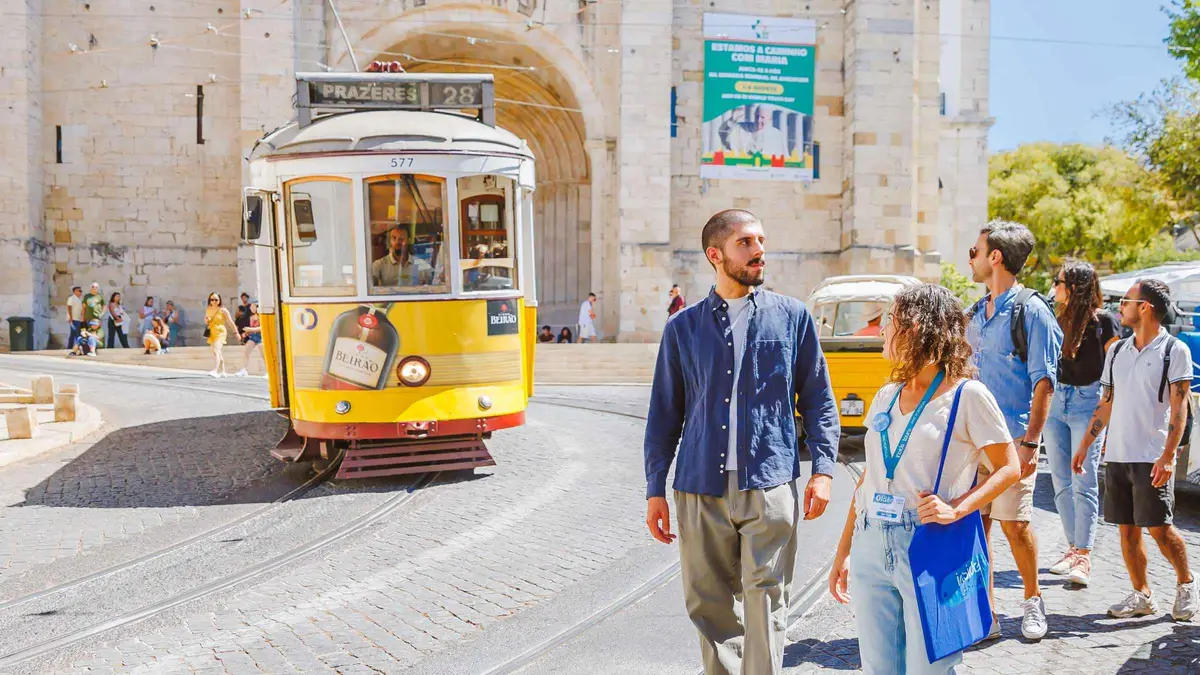
Best of Lisbon Walking Tour: Rossio, Chiado & Alfama
listed at $25.49
Three-hour walk from Rossio and the Carmo Church ruins through Chiado and Baixa into Alfama, with one pastry stop. The cheaper of the two city walks here.
Check Availability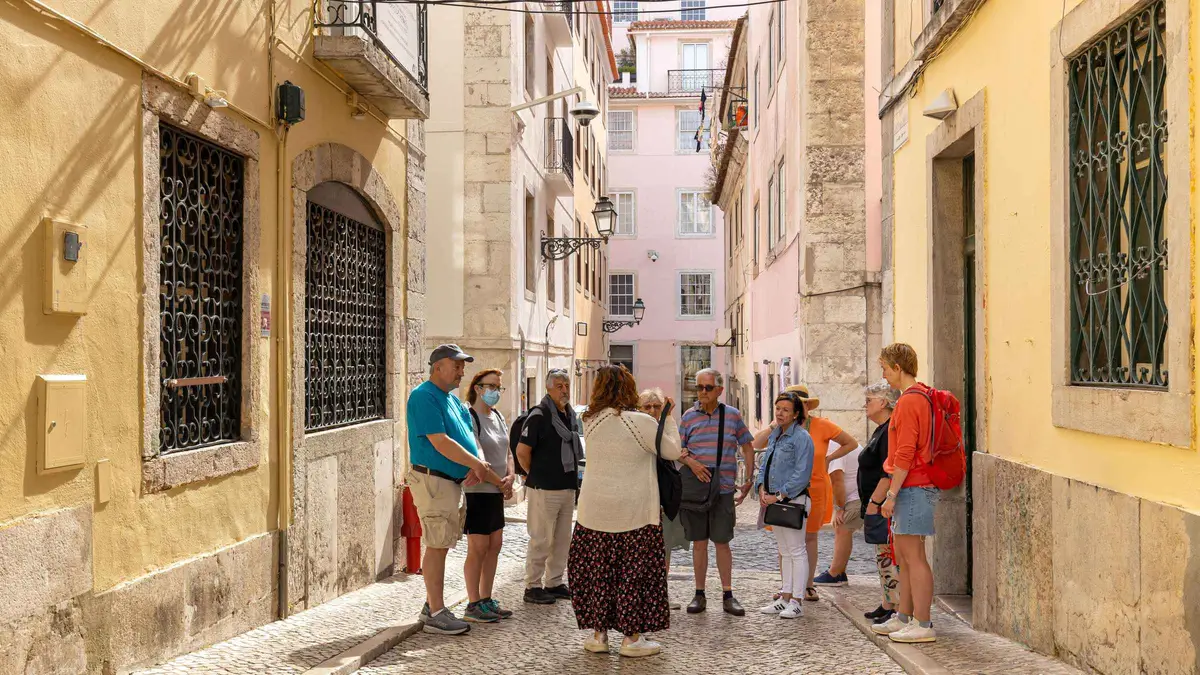 from €25
Lisbon: History, Stories and Lifestyle Walking Tour
listed at $28.96
Three-hour guided walk through Chiado and Bairro Alto up to the Miradouro de São Pedro de Alcântara, built around the city's history and everyday life. Hills and cobbles — wear proper shoes.
Check Availability from €79
Lisbon: Baixa District Food Tour with Dinner and Drinks
listed at $82.37
Evening food tour of Baixa with eight tastings and four drinks across taverns and family-run eateries — it replaces dinner. Evening slot, so it pairs badly with a Fado show the same night.
Check Availability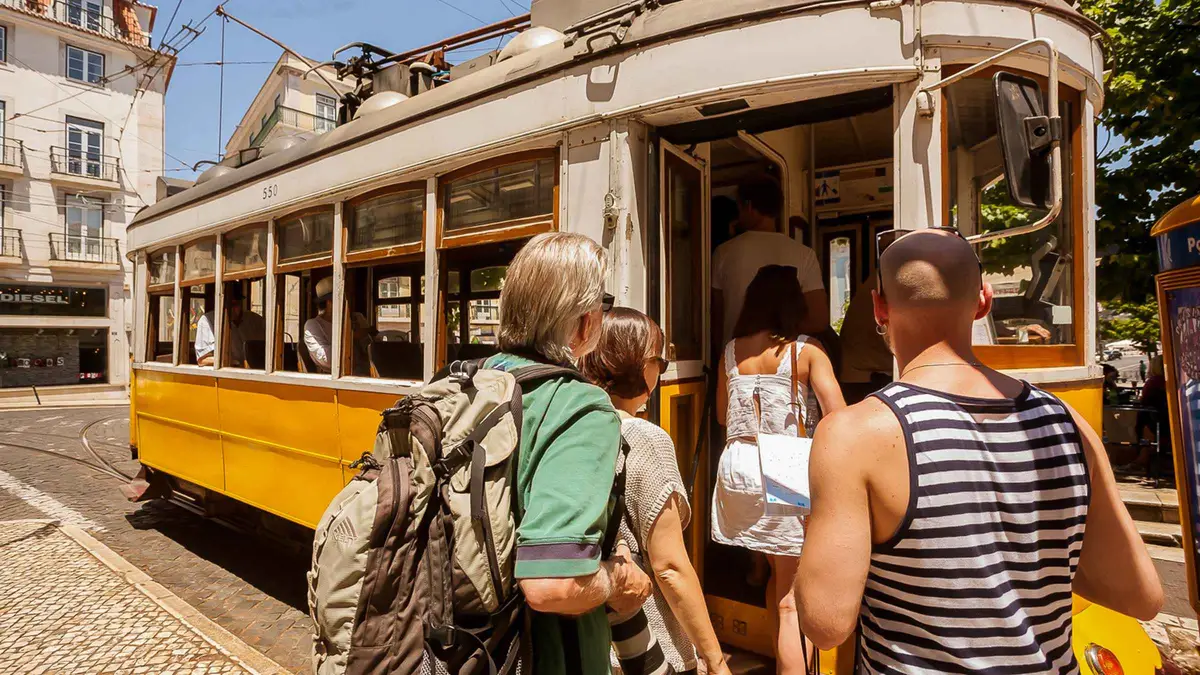 from €20
Lisbon Tram No. 28 Ride & Walking Tour
listed at $23.17
Three-hour combination of a ride on Tram 28 up the hill and a guided walk through Alfama and its viewpoints. Solves the packed-tram problem by riding it with a guide and a plan.
Check Availability from €31
Lisbon Card: 24, 48, or 72-Hour Pass
listed at $35.91
One pass for public transport plus free entry to the attractions on the Lisboa Card list, in 24-, 48- or 72-hour versions. Only pays off if you pack in several paid sights per day.
Check Availability from €47
Lisbon: 72/96-Hour Hop-On Hop-Off Bus, Tram & Boat Ticket
listed at $49
Hop-on hop-off pass covering open-top bus, a vintage tram and a Tagus cruise for 72 or 96 hours. Overlaps with the Lisboa Card only on transport, not on attraction entry.
Check AvailabilityPrices, ratings and details are the platform's own. Dollar figures are the listed prices. The platform bills in your account's currency.
What Baixa is: Pombal's grid and the cage that holds it up
The district is an engineering answer to a catastrophe, and the answer is still standing. Dates and names from Wikipedia.
1 November 1755
The earthquake struck at about 09:40 on All Saints' Day, with the churches full; the fires that followed burned for days and the tsunami came over the riverfront onto the low ground where the palace, the customs house and the medieval lower town stood. This was the ground that suffered most, because it was river silt, and it is the ground Pombal chose to rebuild first. Sebastião José de Carvalho e Melo, later Marquis of Pombal, the king's chief minister, is credited with the order to bury the dead and feed the living, and then with the plan: the medieval streets were not to be rebuilt, the whole lower town would be cleared and laid out again on a grid.
Manuel da Maia, Eugénio dos Santos, Carlos Mardel
The chief engineer Manuel da Maia offered the king several options, from rebuilding as before to abandoning the site; the one chosen was the grid, drawn up by Eugénio dos Santos and Carlos Mardel. Streets run straight from the Rossio to the river and are crossed at right angles by narrower ones; each was assigned a trade, which the names keep, Rua dos Sapateiros for the shoemakers, Rua dos Correeiros for the saddlers, Rua da Prata and Rua do Ouro, now Rua Áurea, for the silver- and goldsmiths. The three main streets, Augusta, Prata and Ouro, run from the Rossio to Praça do Comércio; Rua Augusta is the pedestrian spine.
The façades were standardised so that the whole district could be built from prefabricated parts by different contractors and still look like one design, and the façade you see on one block is the façade on every block.
The gaiola pombalina
Inside each building is the gaiola, the cage: a timber lattice of diagonal braces built into the masonry walls and floors, designed to flex in an earthquake and hold the building up if the stone fell away. Wikipedia calls the result one of the first examples of earthquake-resistant construction, and the story that troops were marched around models to test them is part of the district's founding legend. Party walls were carried above the roofline to stop fire jumping from one block to the next.
The system was tested in the small quakes of the following two centuries and has not faced another 1755; the buildings are eighteenth-century timber frames behind their stone, which is why the fire of 1988 on the Chiado slope was the disaster it was. The district went onto Portugal's UNESCO tentative list in 2004, with the note that it stood above the comparable post-disaster rebuilds of Edinburgh, Turin and London.
The walk: Rossio to the river in an hour, with the baths and the arch
About 1.2 kilometres, flat, with one booking and one ticket. Walk minutes are our estimates.
Start in the Rossio, officially Praça Dom Pedro IV, the square with the wave-pattern pavement, the column with the king on top, the fountains and the Teatro Nacional D. Maria II across the north side; the ginjinha hatch on the corner of Largo de São Domingos, a bar the size of a cupboard, sells the sour-cherry liqueur in a shot glass at any hour it is open. Praça da Figueira, the market square east of it, has the equestrian statue of João I and the view up to the castle. Walk south down Rua Augusta, the pedestrian spine, with the Santa Justa Lift tower rising on your right after two blocks off Rua de Santa Justa; it is closed, so photograph it and carry on.
Rua dos Correeiros, parallel one street east, has the Roman bath-house at number 9 under the Millennium bcp bank, which you should have booked. The MUDE design and fashion museum on Rua Augusta itself is on the grid, and its own site returned an error when we read it, so its hours and price are not stated here. At the bottom, the Arco da Rua Augusta has its door on the street side, €5, 10:00 to 19:00, and the square and the river are through it.
- Rossio and Largo de São Domingos (ginjinha): 15 min
- Praça da Figueira: 5 min
- Rua Augusta south, Santa Justa tower on the right: 10 min
- Rua dos Correeiros 9, Roman baths (booked): 45 min
- Arco da Rua Augusta, €5: 30 min; Praça do Comércio and the river steps: 15 min
The Roman baths under a bank: the Núcleo Arqueológico da Rua dos Correeiros
Under the Millennium bcp building at Rua dos Correeiros 9 is the best-kept surprise on the grid: the remains of a Roman fish-salting works and, above them, a bath-house of the third century AD with a polychrome mosaic in the cold room, the frigidarium, found when the bank rebuilt its headquarters in the 1990s and now run by the Fundação Millennium bcp as a free-standing archaeological site. The mosaic's borders run through knots, spindles, guilloche and a swastika meander, and it was conserved from August to December 2017 after salt crystallisation from the damp had begun to lift it. Visits are Monday to Saturday from 10:00 to 12:00 and from 14:00 to 17:00, closed on Sundays and holidays, by reservation through the foundation's booking system, confirmed in business hours, in groups of up to twelve including the guide.
The foundation's page prints no price, so we print none; other listings call it free, and we leave that to the foundation to confirm at booking. It is the one thing in the Baixa to book before you arrive.
Is Baixa safe? The scams by name and the streets at night
It is the most-asked question about the district and it has a plain answer.
No official crime figure is published for the district, so we quote none. Baixa is a busy shopping and transport district, and its problems are the ones such districts have: pickpockets on tram 28, which crosses the grid on Rua da Conceição and is where the city's professionals work; the men on Rua Augusta who offer sunglasses and then, quietly, something else, which a shake of the head ends; and restaurant terraces on the pedestrian street that charge for the couvert the moment you touch it. Violence is not a reported problem.
At night the grid is lit and busy until the restaurants close, quieter after midnight when the crowd is up in the Bairro Alto or down at Cais do Sodré, and never empty on Rua Augusta. The tourist police station is in Palácio Foz on Praça dos Restauradores at the north end of the grid, the emergency number is 112, and the safety and scams page has the rest.
- Tram 28 on Rua da Conceição: bag in front, phone zipped
- Sunglasses sellers on Rua Augusta: a shake of the head
- Couvert on the terraces: charged if touched; send it back untouched
- Tourist police: Palácio Foz, Restauradores; emergency 112
Is Baixa a good area to stay in? Convenient, flat and loud
It is the practical choice and the one with the fewest surprises: every Metro line touches the grid at Rossio, Restauradores, Baixa-Chiado or Terreiro do Paço, the airport is one change away, the Belém tram and the Cascais train are at the river end, and no street has a step. The trade is what a shopping district trades: chains where the trades used to be, a crowd under the window from 11:00 to 22:00 on Rua Augusta and the streets beside it, and rooms priced for the postcode. Rua da Prata and Rua dos Fanqueiros on the east side are quieter than Rua Augusta; the Rossio and Restauradores fronts are loud and central; the blocks nearest Praça do Comércio sleep earliest.
For a first visit of a few nights most people are happier one street up in Chiado, which has the same Metro and the evening on the doorstep; for a one-night stop with a suitcase, this is the place. The page comparing where to stay in Lisbon covers all seven areas with walk minutes and noise. For the rest of the city, see what to see in Lisbon.
Baixa map: the grid, the squares and the closed lift
The squares at both ends, the three main streets, the Roman baths, the arch and the two closed machines; walk minutes are our estimates from the distances.
Next stop from Baixa
Walk minutes are our estimates from the GPS distances; the grid is flat and every neighbour is uphill.
Chiado
The café-and-bookshop hill above, with the Carmo Convent and the usual first-visit hotel. Chiado is the compromise between this grid and the Bairro Alto.
8 min up Rua do CarmoPraça do Comércio
The river square the grid was built to frame, with the arch viewpoint and the tourist office. Praça do Comércio is where tram 15E to Belém leaves.
4 min through the archAlfama
The medieval streets that survived 1755 because they stood on rock, climbing from the cathedral to the castle. Alfama is the stairs the Baixa does not have.
10 min east past the SéStaying in Baixa: the streets that sleep and the ones that do not
We did not read a rate band for this page, so no price is printed here; the link opens live rates for your dates, and the where to stay page compares the areas. What this page adds is the grid's own noise map, which the booking pages do not show.
Baixa Pombalina
- Walking distance
- On four Metro stations; 4 minutes to the river, 8 to Chiado
- Typical double
- Live rates on the link; priced for the postcode, with the chains and the boutique conversions side by side
- Suits
- A one- or two-night stop with a suitcase, early trains, anyone who wants no stairs at all
Rua Augusta and the Rossio and Restauradores fronts are loud until the restaurants close; Rua da Prata, Rua dos Fanqueiros and the blocks nearest Praça do Comércio are quieter. Every room is in an eighteenth-century timber-framed block, so ask about the lift.
See stays in Baixa PombalinaThe city charges a tourist tax of €4 per person per night, for a maximum of seven nights, from age 13, on top of any rate. We take a commission if you book through this link, at no extra cost to you.
Baixa questions
Is Baixa a good area to stay in Lisbon?
For convenience, the best: four Metro stations, no stairs, the river and the Belém tram at one end and the Rossio at the other. For quiet and character, Chiado one street up is the usual compromise. The staying section names the quieter streets and where to stay compares the areas; the Lisboa Card is collected on the square at the bottom.
Is Baixa safe at night?
Yes: lit, busy until the restaurants close and never empty on Rua Augusta, with pickpocketing on tram 28 and the sunglasses sellers as the reported problems and no violence issue any official source records. The tourist police station is at Palácio Foz on Restauradores; the safety section and the safety and scams page have the details.
What is Baixa known for?
The Pombaline grid built after the 1755 earthquake, with its trade-named streets, uniform façades and the gaiola timber cage inside each building that made them Europe's first earthquake-resistant blocks; the Rossio, Rua Augusta, the arch and the Santa Justa Lift. The history section has the engineers and the Rossio, Chiado and Alfama tour walks it with a guide.
Is Baixa the old town of Lisbon?
No, it is the new town of 1755: the medieval lower town was cleared and rebuilt on the grid. The old town that survived the earthquake is Alfama, on the rock under the castle ten minutes east, and the Bairro Alto grid on the hill west is two centuries older than this one.
What is there to do in Baixa?
Walk it in an hour from the Rossio to the river: the ginjinha hatch, Rua Augusta, the closed lift from the street, the Roman baths at Rua dos Correeiros 9 if booked, and the arch at €5; the walk above has the order and the sight table the hours. The Baixa food tour with dinner is the evening version.
How do I book the Roman baths on Rua dos Correeiros?
Through the Fundação Millennium bcp booking system, for a slot Monday to Saturday between 10:00 and 12:00 or 14:00 and 17:00, closed Sundays and holidays, in groups of up to twelve; the foundation confirms in business hours and prints no price, so we print none. The Roman baths section has what you will see.
Baixa on Video
Three walks across the Pombaline grid, from Rossio to the river. They show the flat streets and the arcades the page describes; the shop and sight hours printed here are the ones we read in August 2026.
Walking Lisbon: Exploring the Baixa neighbourhood
A walk through Baixa street by street, following the grid the page maps.
Video: Not Lost AdventuresTour of Baixa Neighborhood in Lisbon - Portugal Travel @joricmclean
A tour of the neighbourhood from Rossio to Praça do Comércio, the axis of the walk above.
Video: Joric McLeanBaixa and Chiado, Lisbon - A walk through the elegant center of Lisbon
Baixa and Chiado together, useful for seeing where the flat grid ends and the hill begins.
Video: Travelling PigsVideos load from YouTube only when you press play.
Prices, hours and terms are set by the venue or operator and confirmed at checkout.
We may earn a commission if you book through one of our links, at no extra cost to you. Full affiliate disclosure